Spain has the 2nd largest high speed train network of the world, only after China (and only in the last few years, it was #1 before). So I don't think it's a problem of investment, it's a problem of how well you maintain things, if you overbuild and then cannot finish or maintain it then it's a problem that has little to do with economy.
Another example of high speed train, they forced flight companies to make the Valencia <=> Madrid flights more expensive because people preferred going by plane than by train (faster, easier, way cheaper). Yup, instead of making the train better or cheaper, just force the private companies to be worse so the public infra can compete. Why was it so expensive? Because of it being many times overbudget? Why? Because everyone was taking money.
Flying is artificially cheap to the point the ticket prices make no sense. It's massively subsidized, so it's not really fair to compare it with the train.
Anyways, I have to hard disagree on flying being faster and easier than going by train. Flying is a pretty horrendous experience in comparison, and if you account for the time spent in the airport and getting to it it's not faster either.
Shouldn't the national high speed rail be at least as subsidized as private flight companies?
This particular flight I'm discussing it's more convenient. Getting to the high speed train station is tricky (there's no subway there!), you have to go to the closest one and then walk 10-15 min, which is just slightly faster but harder.
Let's see times:
• Train: 15 min to the station + 15 min early + 1.5h in the train + 15 min in destination = 2h15min
• Plane: 30 min to the station + 30 min early + 30 min flight + 30 min at destination = 2h
(this is domestic flying where you normally just walk in fairly straightforward)
You overestimate the speed of the train (30 minutes of flight = 3h by train) but underestimate the time it takes to fly.
I live in London and my closest train station is 10 minutes by foot, the closest airport is 1h by car or 2h by public transport. Also I tend to arrive 2h before departure, so flying burns at least 4h before even sitting in the plane and maybe as many hours when you land. It's a whole day affair. Domestic flights aren't any better. You save maybe 10 minutes not queueing for passport control.
Flight is terrible unless it's intercontinental. But most prefer the plane because it's vastly cheaper.
No, this is high speed train so it's shorter. My numbers were off both by 20min though, I searched harder numbers and the flight is 53 min while the train is 1h50min, but luckily that doesn't change my overall comparison.
You live in London as you said. That's a totally different experience from a local domestic smaller airport in Spain. Budgeting 30min for a domestic flight (no traffic, no check in, no passport, 2-3 min walk to any gate, literally just the security check) is enough, if you want to be extra careful sure plan to arrive 1h early, but every time I've regretted it since then I had 50 min to wait.
As a Spaniard, I think that's highly suspicious of being one of those internal internal consumption narratives of how bad everything is.
Do you have any proof of that scheme you're mentioning? I say this because, believe it or not, one of the things that Spain does right is building infrastructure on a budget. There has been corruption cases and places when it has been horrid, but in general is well managed.
You'd be surprised how bad it is in many other countries deemed better by your average spaniard. In terms of cost overruns, time, and all kinds of nasty shit.
US is too big and too sparsely populated both on a large scale and small scale for trains like Europe, Japan and China.
There's a part where no one talk about, and that's the infrastructure within the city are not conducive to trains. People get to a train station and they need to get around and unless you're talking about New York they really just need another car.
This in comparison to European and Asian cities where your friend can just post you an address and you can use public transit all the way to the last block.
US is big is a silly way to reject trains. So are China and India. Both have extensive train networks that allow people to take a train instead of long road trips. The trains are packed. Mobility is super high and abundantly available. Quality may differ but it's improving because people want it. Either way, it keeps cars off the road leading to less pollution, less metal junk and less inflation.
US land is amazingly well suited for HSR and cities are well suited for subways. We also have the money. The only problem is political.
Why would I want me and my family on a packed train with our luggage and gear rather than in our comfortable, climate controlled, and spacious vehicle? Who would seriously vote for that?
I’m grateful to live in a country where having a vehicle is normal and not just for the wealthy class. I’m happy to not be packed onto public transit if I want to take the family to the beach or go hiking or something.
> Why would I want me and my family on a packed train with our luggage and gear rather than in our comfortable, climate controlled, and spacious vehicle? Who would seriously vote for that?
You don't need to. It's not like those countries with extensive train networks don't have cars and interstate highways. They do and people use them. The point is that in those countries, cheap options exist for all income brackets and all use cases.
Poor people in America have cars generally speaking. In the USA our idea of poor is very far from what those countries consider poor to be. Our poor are solidly middle class by their standards.
I'm afraid my experience with poor people has been very different. You should go visit some poor people in a suburb and hear their conversations - "I need to do an oil change but I can't spare the $100. I wish I had a ride to the grocery store"
Then again, at least the comparison with India doesn't work given the massive gulf in costs, safety standards and historical context (India's railway network being inherited from when it was a colony and there were less ethical 'restraints' on how to control costs).
The US has a massive setup cost problem, any significant infrastructure project takes years of regulatory hurdles and then legal challenges as competitors and NIMBYs try everything they can to slow things down.
Thus ending up being way more expensive than countries where they still have slums to ruthlessly tear down or land to seize from small-time farmers to make room for new infrastructure (not to imply that the way it works in the US is much better).
> The US has a massive setup cost problem, any significant infrastructure project takes years of regulatory hurdles and then legal challenges as competitors and NIMBYs try everything they can to slow things down.
This is exactly what I meant by political problems.
> Thus ending up being way more expensive than countries where they still have slums to ruthlessly tear down or land to seize from small-time farmers to make room for new infrastructure (not to imply that the way it works in the US is much better).
India razed slums and farms for trains, the US razed forests and farms for interstates. It's the same thing. Slums in India have a land value to them. The government doesn't get that land for free. Just pay out property owners market value+20% for infrastructure and build the thing that is so direly needed.
It's a catch 22. The excuse for not building proper transit is sprawl and the excuse for sprawl is not having proper transit. Sprawl always wins in the US.
It's a very short sighted excuse to use for not building transit. Sure if you don't have a land-use plan, but then why build the transit in the first place. These things always go hand-in-hand; many towns started as a train station.
You didn't read the local scale problem did you? New England is as populated as Europe but that's moot because you still need a car when you get to the station because suburbia.
In European cities you have bus service in trackless suburbia. Tracks are always better but need bus service in addition as practically you won't be building tracks everywhere.
The Yamanote Line doesn't run through the countryside. You could just build it around LA, and then build dense housing near stations once people don't need cars...
I live in the burbs currently (3 minutes from a train station and convenience store). This station has a decently sized parking lot and people who want to have yards can always find parking there.
Public transport in London is notoriously expensive though it is true.
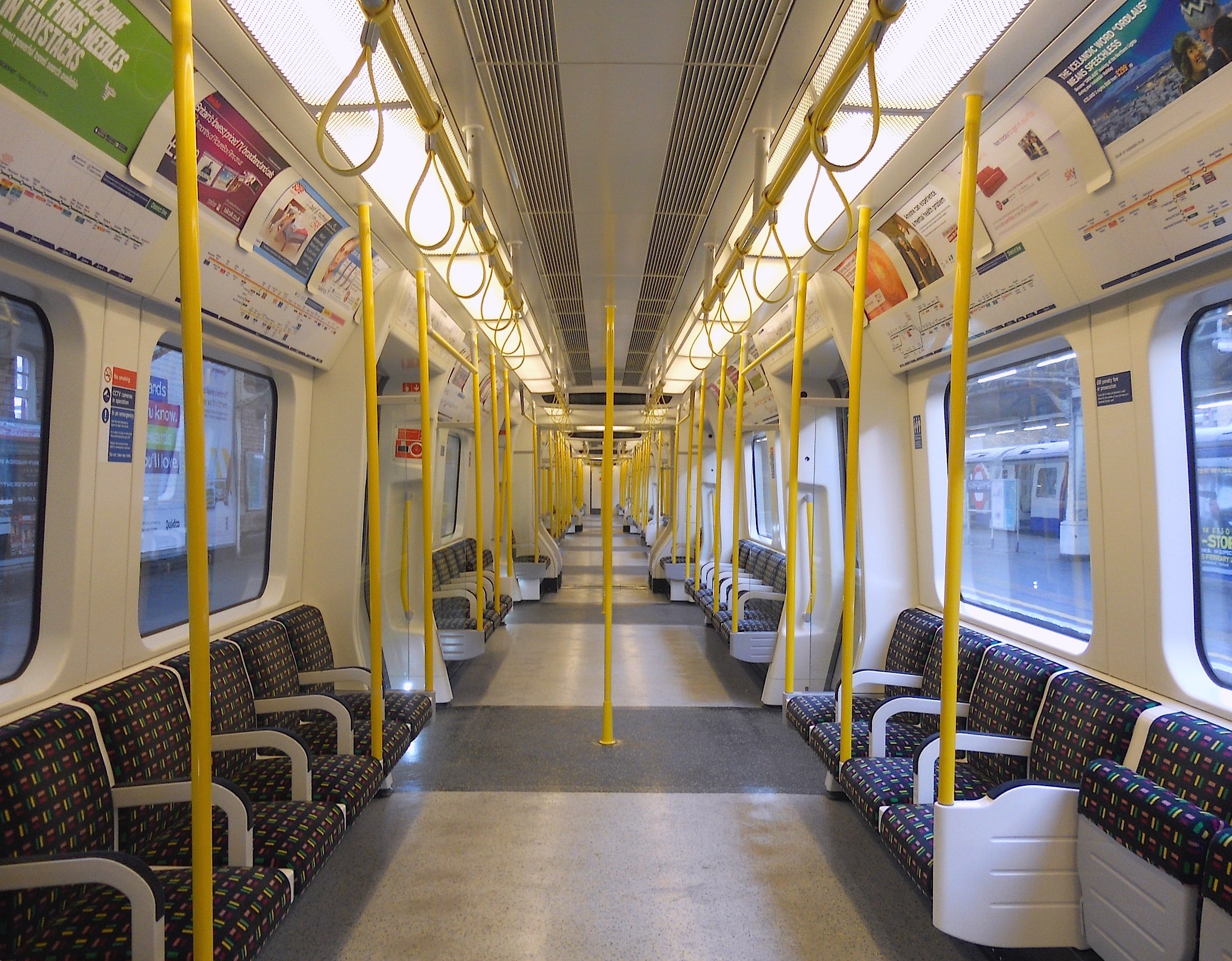
One major failing of the NYC subway in my mind is the near total lack of signage. There is like one map per carriage (which is often hidden behind people standing or sitting), and the platforms have almost no signage or maps or directions. You look out the window to see where you are when you pull into a station and there are no signs. Perhaps there is a single letter initial every 30 meters or so... WTF? At least in London the station name is repeated all the way along the platform (along with route maps and network maps and colour-coded signs to other lines etc), there are like 8 maps in every carriage at above-head-height so you can see it over people etc.
The express routes in NYC subway are awesome and I wish London had those
Many train lines in Japan are funded in a public-private mix.
I don't want to overstate this too much, I dislike the JR privatisation (including a part where a lot of the public-era debt ended up in the gov't's hand), and all the train companies here do a combo of offering the train service and doing loads of real estate offerings at each station (making them very successful organizations overall). But I believe that we would see much less train coverage without continued gov't financing in these projects.
In both cases the people benefit, but in one the people benefit and it's still public property, whereas in the other the public goods were sold to business people and the business people are now getting a cut. [0]
If somebody is making money off of a transaction, that money is coming from somewhere. At the margins that is fine but when we're talking about 10s of billions of dollars it just looks like a handout from the general public to people who had enough money to invest in a transportation corporation during its privatisation.
Counterfactuals are not resolvable though, but I think we can look at how this stuff was built out and decide if there are structures to do it without having to just let go of democratic control of vital infrastructure.
[0]: yes I understand that there's a universe where the public-run version just falls apart and doesn't exist.
The US government spends about as large a percentage of GDP on healthcare as the UK does. It's just that in the US we double-dip for asking the users of healthcare to pay the same amount again.
On the topic at hand, though: Scotland has recently introduced free bus travel for resident under 25s, which is really useful. When I was that age I'd always take the bus over to Glasgow, because it was cheaper than the train. Between long-distance and local bus services, my teens can get most places in Scotland reasonably easily. And even down to Berwick or Carlisle, although they'd need to pay to go any further into England.
Agreed. Spain is leading the world here. It's frankly embarrassing
given our population density, love or railways and history (inventing
them), we have "Railtrack" plus a dozen foreign-owned totally rubbish
train companies. We are more concerned with ticket barriers, CCTV
cameras and Orwellian tracking of passengers than getting people from
A to B so the economy can prosper with the smallest environmental
harm.